
Being Black in a (majority) white culture is difficult. However, within the difficulty lies a unique opportunity to speak into mental health issues and advance the kingdom of God.
I always felt different growing up. I wasn’t around a lot of people who looked like me.
Most of my experiences with people who looked like me occurred on “mission trips” with my (majority) white church. As you might imagine, that created a tension between me and the people we were serving. I subconsciously walked around with a superiority complex, although that was quickly squashed when I got back to our church bus and listened to discriminatory jokes about the very people we were serving—people who looked like me. No matter how much I laughed along or contributed to the injustice, it didn’t change my skin. I was still Black and still didn’t feel like I belonged.
Over time, these experiences began to weigh on my mind and increase my anxiety. Soon I became very anxious about interactions with people of colour who were outside of my family. That anxiety even affected my relationship with God because I wasn’t sure how God saw me in comparison to white people. Did God also laugh at me? Did God also see me as “less than?” Did God also see me as different?
It wasn’t until my late-twenties that I finally began to find answers to some of those questions and in doing so, I managed my anxiety. Through an extremely formative experience in Atlanta, Georgia, I faced the reality that God did see me as different. I was invited to write songs with a small group of songwriters from around the world. I wasn’t sure what to expect, but I knew that this group would be different than any other that I’d been in before. And I was right. Literally from the start of the trip.
When I boarded my flight for Atlanta, I was pleasantly surprised that every flight attendant on the flight was Black like me. I had never seen a Black attendant before and heard my inner child whisper, “Ah, so we can be flight attendants.” Sometimes, we don’t know what’s possible until we see it. Once I landed in Atlanta, I immediately noticed the diversity of people around me. It’s a “minority-majority” in Atlanta, meaning that there are more people of colour than white people, and I had never been in a scenario like that before. I was always the “other,” but this time I wasn’t. Instead of wondering if everyone was staring at me, I found myself staring at everyone. Not a single person of colour looked the same. Some shared the same skin colour, but they each talked different, walked different, smiled different, laughed different—they all were different. I began to wonder why that was the case, and further, why this was a newfound realization for me. It turns out that like many white people, I woefully assumed that Black people and other people of colour all fit a certain stereotype.
Questions still spun around my head as I finally arrived at the house where we were going to be writing songs. As had happened in the city, I was greeted by many faces that surprised me, both of white people and people of colour. We spent some time getting to know each other and swapping stories before someone got up to pray for our songwriting time. In that prayer, he said twelve words that have forever marked me: “Heaven doesn’t look like just me or you, it looks like us.”
It hit me like a load of bricks. God saw me as fearfully and wonderfully made on purpose with a purpose (Psalm 139:13-14, Colossians 1:16-20). He made me as a Black man with something unique to offer the world by being authentically and unashamedly me.
That truth is not unique to me though. No one was made purposeless. The colour of our skin and our cultures of origin were all intentionally and uniquely given to each one of us to reflect the heart of God in a way that only we can, individually. That said, none of us individually, or within our subgroups, can reflect the beauty of God alone. God is far too beautiful and complex to solely exist within one monochromatic way of being (Job 36:22-26). Yes, we are beautiful individually; however, the full beauty of our God is only seen through diversity. When we stand together with our differences, instead of against each other because of our differences, we see more of God. This truth is further affirmed in John’s vision of heaven in the book of Revelation. Diversity, both earthly and heavenly, surrounds the throne of God (Revelation 4, Revelation 7) as creation worships Him in unity, not uniformity. What a glorious picture of what awaits us, and also a glorious invitation of what is available to us now.
There are endless opportunities to see God differently in our communities today. The modern wonders made available to us through transportation and technology make it virtually impossible for us not to interact with people who are different from us. The question is, will we take advantage of those opportunities? There are countless ways to respond to that opportunity, however, here are two specific questions that I ask you to consider.
1. How can I create space to be authentically myself in my community? God made you and the world needs you—not the version of yourself that you think others want you to be. It’s unhealthy to pretend to be someone else. Disconnecting from yourself can significantly impact your mental health as well, contributing to experiences of anxiety, depression, and other mental health challenges.
For most of my life I experienced these symptoms. It took a long time for me to realize that my body was trying to signal me to reconnect with myself. Talking to trusted family or friends, going to counselling or therapy, and engaging with tools offered by organizations such as Sanctuary Mental Health Ministries, can be helpful and needed resources on your journey back to yourself. You may learn helpful strategies to reconnect with yourself as well as boundaries needed to protect yourself. After my experience in Atlanta, I regularly met with a few pastors and thought leaders that helped equip me with similar strategies and boundaries on my journey back to myself. I still meet with some of them today!
2. How can I create space for others to be authentically themselves in my community? Notice that I put this question second. You can’t create or hold space for others if you haven’t done so for yourself. Before I could advocate for people of colour in (majority) white spaces, I had to advocate for myself. As I have learned and am learning what I need to bring my authentic self into different communities, I share those insights in hopes that it makes it easier for whoever is behind me. There are people before me who helped make the space that I occupy and there are people behind me who will continue to increase that space. It takes community to create community.
I believe that by daily answering those two questions, among others, we can create a world where more people feel the freedom to be themselves and in doing so, discover that there is room for them in the kingdom of God.
TEMITOPE
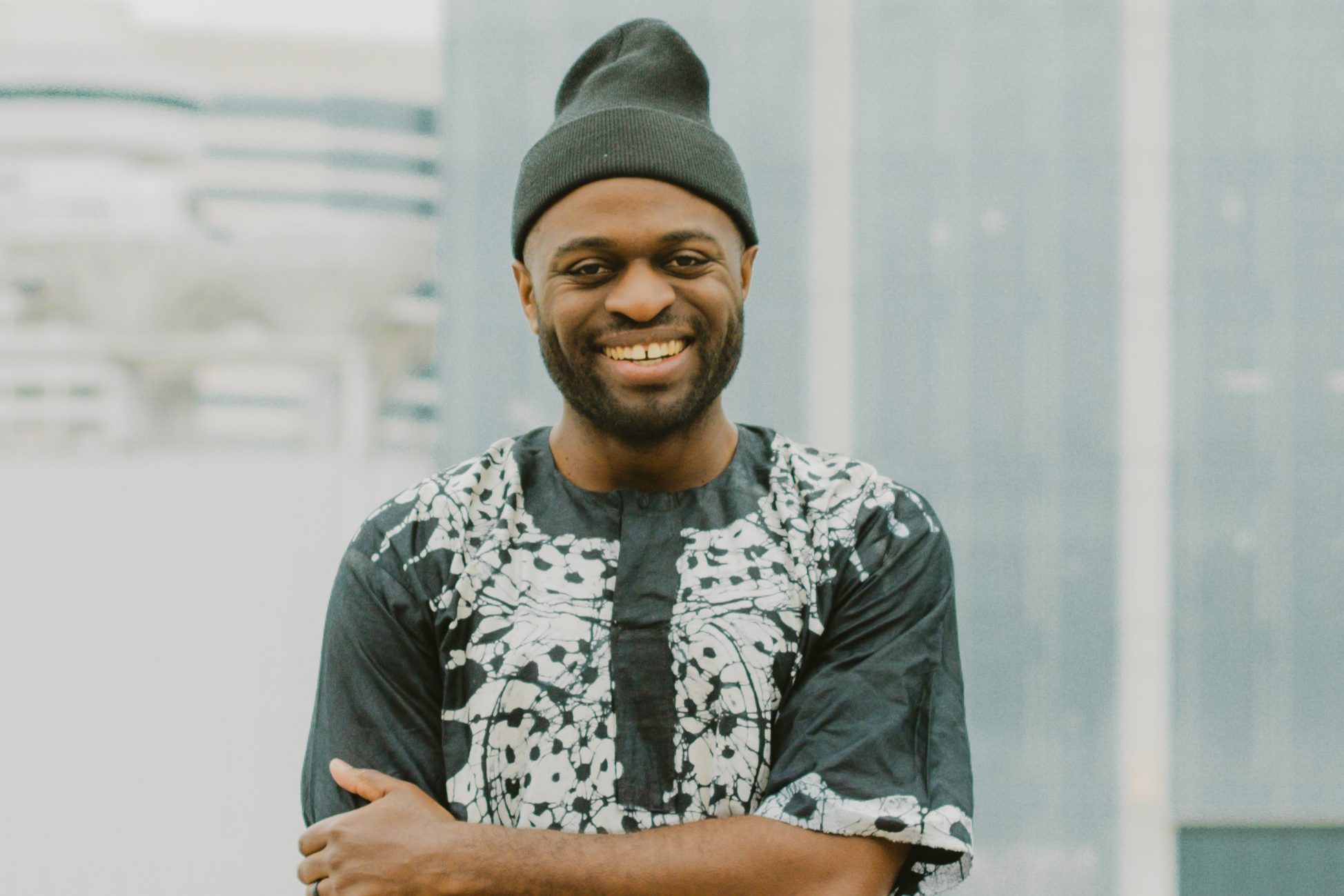
TEMITOPE, a singer/songwriter and worship leader hailing from Nashville, TN, brings a blend of cultural richness and spiritual depth to his music. Born into the Yorùbá tribe in Nigeria, his name, meaning “mine is thanks,” echoes a profound gratitude that is intricately woven into the fabric of his life and artistry.
Growing up in a multicultural household with a Nigerian father and British mother who immigrated to the United States, TEMITOPE developed a profound appreciation for diversity, which became a guiding force in his musical journey. Rooted in a mission to foster unity in the Church, he serves as a worship leader, using the transformative power of music to lead congregations into the presence of God.
TEMITOPE believes in the unifying force of music, creating an atmosphere where people from all walks of life can come together in worship. This philosophy isn’t confined to his musical endeavors; it permeates every aspect of his life.